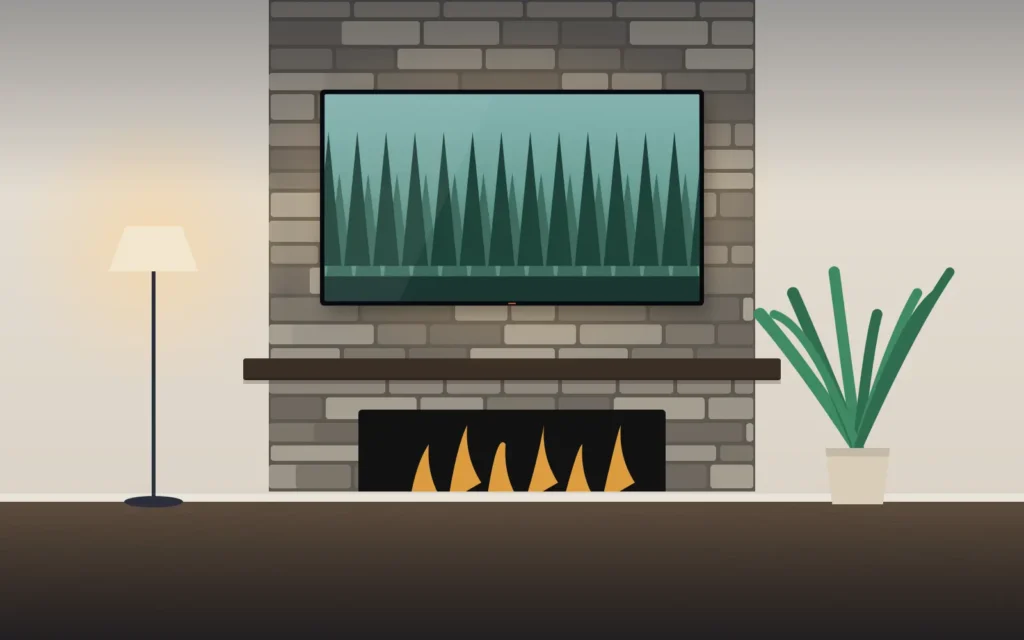
In many homes, the wall above the fireplace is the obvious spot for the TV. It’s the focal point of the room, and the furniture already faces it. The good news is that it can often be done safely. The catch is that three things need checking first: heat, the wall itself and viewing height.
1. Check the heat
Every TV has a maximum operating temperature in its manual. Many TVs list a limit around 35 to 40°C (95 to 104°F), but check yours. The wall directly above some fireplaces gets hotter than that, especially wood-burning fireplaces and some gas units without a mantel.
A simple test: run the fireplace on high for at least 30 minutes, then hold your hand flat on the wall where the TV will go. If it’s uncomfortable to keep your hand there, it’s too hot for the TV. A cheap infrared thermometer gives you an actual number.
What helps if it’s borderline:
- A mantel deflects rising heat away from the wall. Deeper mantels work better.
- A heat deflector or hood can be installed above the opening.
- Mounting higher increases distance from the heat, but creates a height problem (see below).
By fireplace type
Electric fireplaces
Usually the easiest. Many produce little heat at the top, although some models blow warm air out of the top front edge. Check where the heater vent is.
Gas fireplaces
Vary a lot. Direct-vent units with a good mantel are often fine; units with heat coming out the top front may not be. Do the hand test with the fireplace on high.
Wood-burning fireplaces
The hottest, and smoke and soot can also reach the TV. We often recommend a different wall unless there’s a substantial mantel and the heat test passes comfortably.
2. Check the wall
Fireplace walls are built from many different materials, and each needs a different approach:
- Natural or manufactured stone: masonry bits, anchors placed in solid stone, not loose veneer pieces.
- Brick: drill into the brick face rather than the mortar joints for a stronger hold.
- Tile over cement board: careful drilling to avoid cracking the tile, with anchors behind it.
- Drywall chimney chase: common in newer homes; mount into the framing behind the drywall.
Also consider the wiring. On a drywall chase, cables can often run inside the wall. On stone or brick, the usual answer is a slim cover along the side of the fireplace or a route through the mantel.
3. Check the viewing height
Even when heat and the wall are fine, a TV above a fireplace usually sits higher than ideal. Watching at a steep upward angle every night is genuinely uncomfortable. Options:
- Mount as low as the mantel allows. Every inch helps.
- Tilting mount: angles the screen down toward your seating and reduces glare.
- Pull-down mantel mount: the best solution for tall mantels. The TV lowers to eye level when you watch, then lifts back up above the mantel when you’re done.
See our guide on the right height to mount a TV for the measurements installers use.
When we’d suggest another wall
- The heat test fails and there’s no practical way to deflect it.
- The mantel is very tall and a pull-down mount isn’t an option.
- The fireplace is wood-burning with no mantel.
- The stone veneer is loose or damaged.
In those cases, an adjacent wall or a corner with a full-motion mount often works better.
Our fireplace TV installs
When we mount above a fireplace, we test the heat, inspect the wall, plan the cable route and recommend the mount that keeps your TV safe and comfortable to watch. We install above electric, gas and wood fireplaces on stone, brick, tile and drywall across Hamilton, Ancaster, Burlington, Oakville and the GTA.
Learn more about our fireplace TV mounting service or send a photo of your fireplace for a free quote.