A security camera is only useful if it sees the right things clearly. Too high and it captures the tops of heads; too low and it’s easy to knock off; pointed at the wrong spot and it records hours of nothing. Here’s where cameras do the most good on a typical Ontario home, and how to set them up so they’re useful rather than annoying.
Quick answer: where should home security cameras go?
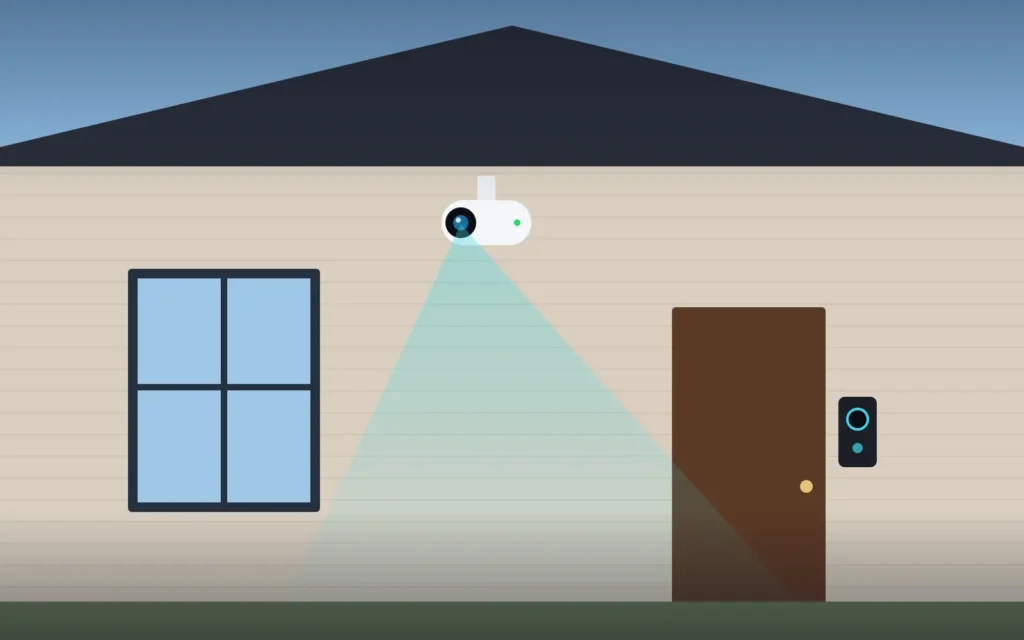
Start with the front door, the driveway or garage, and any back or side doors, since most break-ins happen through doors. Add cameras covering ground-floor windows facing the yard. Mount outdoor cameras about 8 to 10 feet high, angled slightly down, and aim them at your own property rather than neighbours’ homes.
- Video doorbell for the front door and parcel deliveries
- Wired PoE cameras for the most reliable full coverage
The most important camera locations
| Location | Why it matters | Best camera type |
|---|---|---|
| Front door | Visitors, deliveries, package theft | Video doorbell or porch camera |
| Driveway and garage | Vehicles, the garage door, the approach | Floodlight or wide-angle camera |
| Back door | A common entry point, often out of sight | Weatherproof outdoor camera |
| Side gates and paths | Routes into the backyard | Outdoor camera with night vision |
| Ground-floor windows | Hidden spots facing the yard | Wide-angle outdoor camera |
| Main hallway or stairs | Movement inside if someone gets in | Indoor Wi-Fi camera |
How high to mount cameras
Outdoor cameras work best about 8 to 10 feet off the ground, angled slightly down. That height:
- Captures faces rather than the tops of heads
- Keeps the camera out of easy reach
- Reduces glare from headlights and the sky
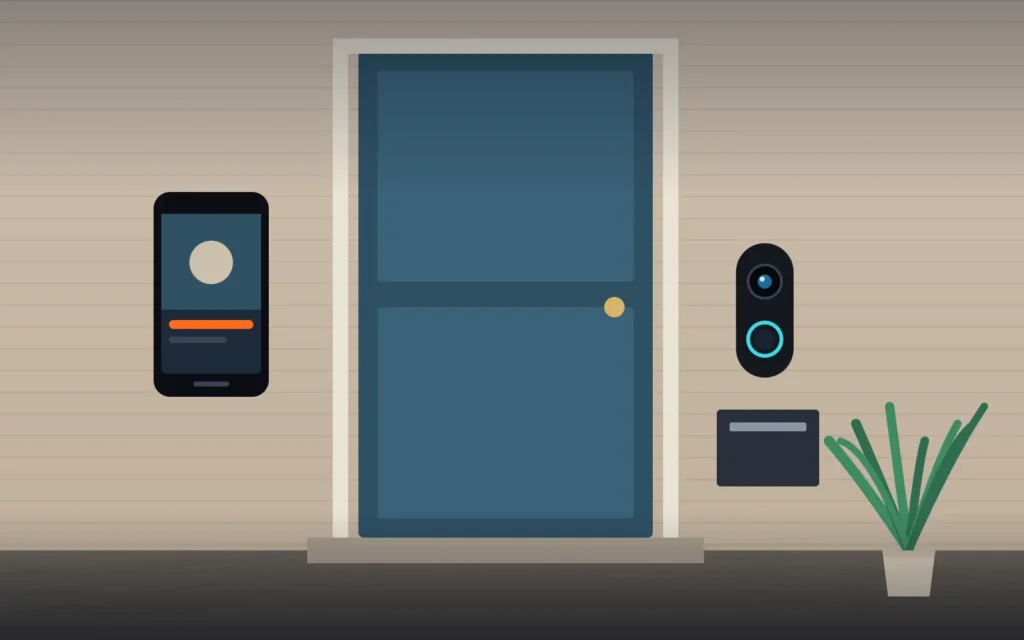
Video doorbells sit lower, usually around 4 feet, so they see faces at the door. Under-eave mounting protects cameras from rain and snow, which matters through an Ontario winter.
Wi-Fi, battery or wired?
Wi-Fi plug-in cameras
Easy to install where there’s an outlet nearby and a strong Wi-Fi signal. Good for porches, garages and indoors.
Battery and solar cameras
No wires at all, so they can go almost anywhere. Batteries drain faster in cold weather and with heavy motion, so check them over the winter.
Wired PoE cameras with a recorder (NVR)
Each camera runs on one network cable that carries power and video to a recorder. They don’t depend on Wi-Fi, record continuously and are the most reliable choice for full-home or business coverage.
A tip: before mounting a Wi-Fi camera, check the signal strength at that exact spot. Brick and stucco walls weaken Wi-Fi more than you’d expect.
Reduce false alerts
- Set motion zones so the camera ignores the street, trees and passing cars.
- Turn on person detection if your camera supports it.
- Avoid pointing cameras directly at bright lights or the sky.
- Adjust sensitivity after a few days of real alerts.
Respect your neighbours’ privacy
Cameras should focus on your own property. Aim them away from neighbours’ windows, yards and doors, and use privacy zones in the app to black out areas you shouldn’t be recording, such as a neighbour’s backyard. If you own a rental property or a business, check the rules that apply to recording tenants, staff or customers before installing.
Winter-proofing in Ontario
- Mount under eaves or soffits where possible to keep snow off the lens
- Use weatherproof cable entry and drip loops where cables enter the wall
- Choose cameras rated for cold temperatures
- Keep battery cameras charged before cold snaps
Home security camera FAQs
How many security cameras does a house need?
Most homes start with three or four: a video doorbell, the driveway or garage, the back door and one covering the backyard. Larger properties may need more.
Are wired cameras better than Wi-Fi cameras?
Wired PoE cameras are more reliable because they don’t depend on Wi-Fi and can record continuously. Wi-Fi cameras are quicker to install and fine for a few cameras near a strong signal.
Can my camera record my neighbour’s yard?
Aim cameras at your own property and use privacy zones to block neighbouring yards and windows. If you’re unsure about a specific situation, check local rules before installing.
Do security cameras work in Ontario winters?
Yes, if they’re rated for cold temperatures and mounted under eaves or soffits. Battery cameras drain faster in the cold.
Get your cameras installed properly
We install smart Wi-Fi cameras, video doorbells, floodlight cameras and wired PoE systems across Hamilton and the GTA, and set everything up on your phone. See security camera installation or get a free quote.